Neighbors Coffee Roasters
Words by Angelina Feronti
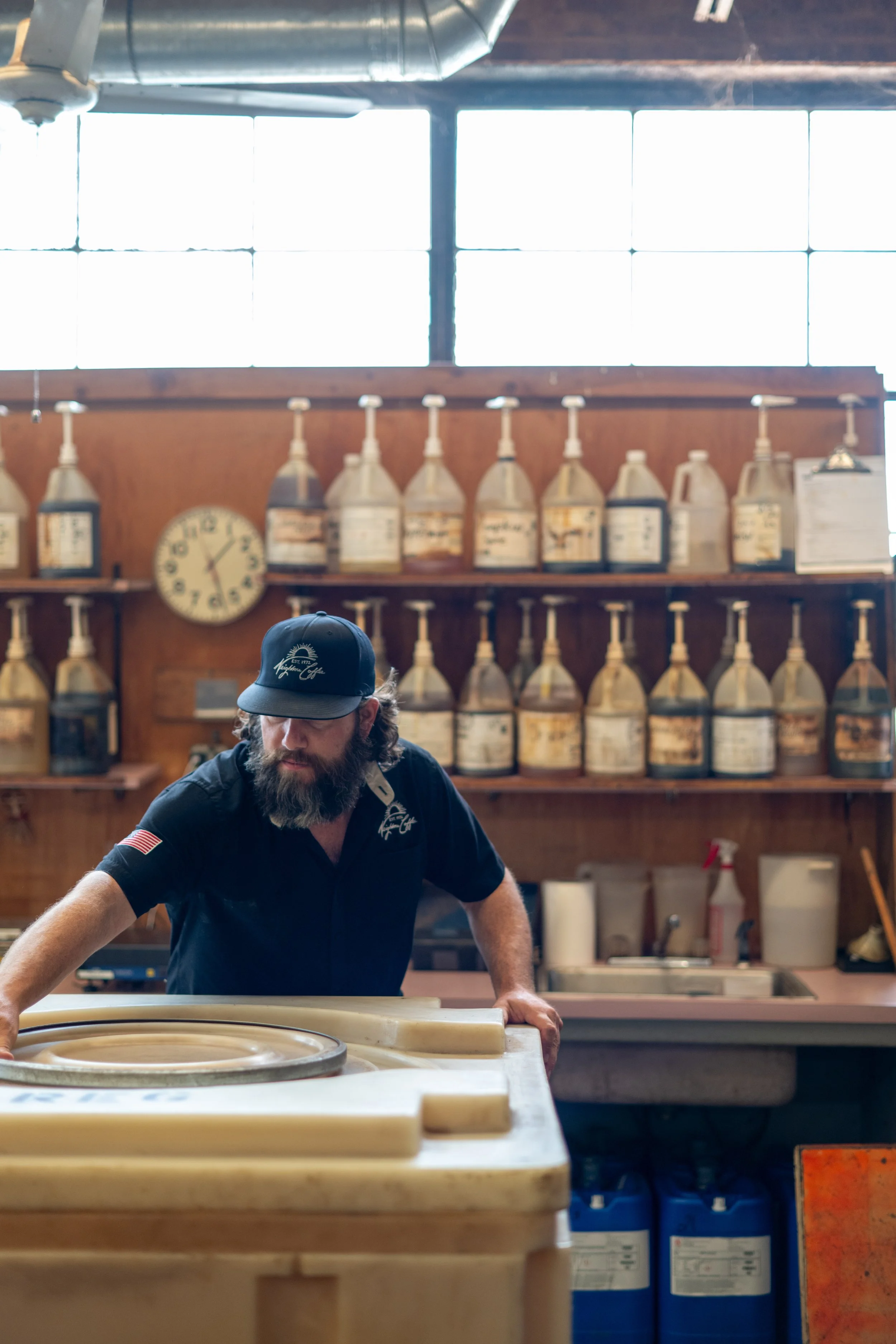
Established in 1972, Neighbors Coffee Roasters is the freshly roasted, made-to-order coffee beans equivalent of Willy Wonka and the Chocolate Factory (1971). Their bordering origin dates may be pure coincidence, but there’s a kindred sense of old-school magic that runs through Neighbors.
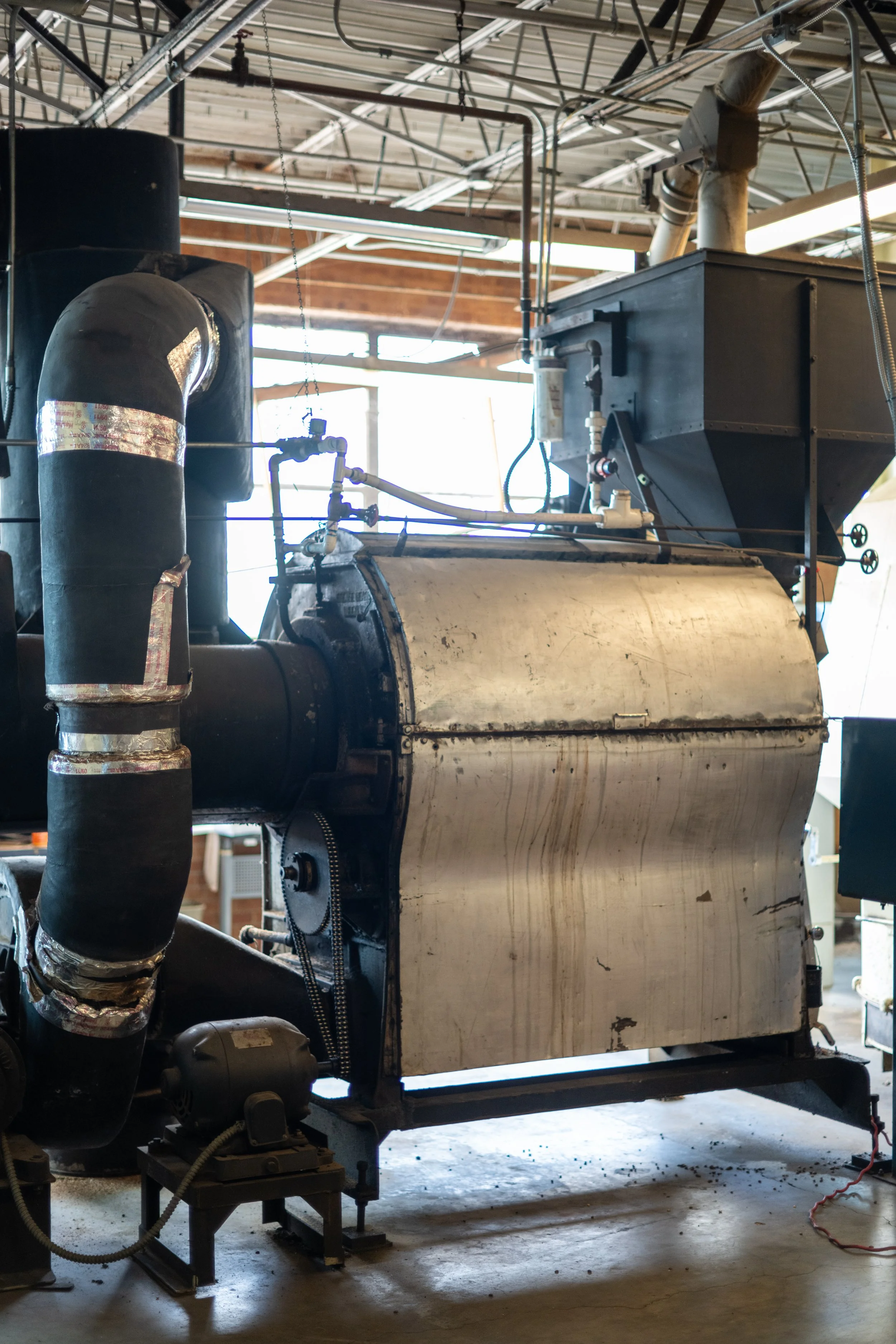
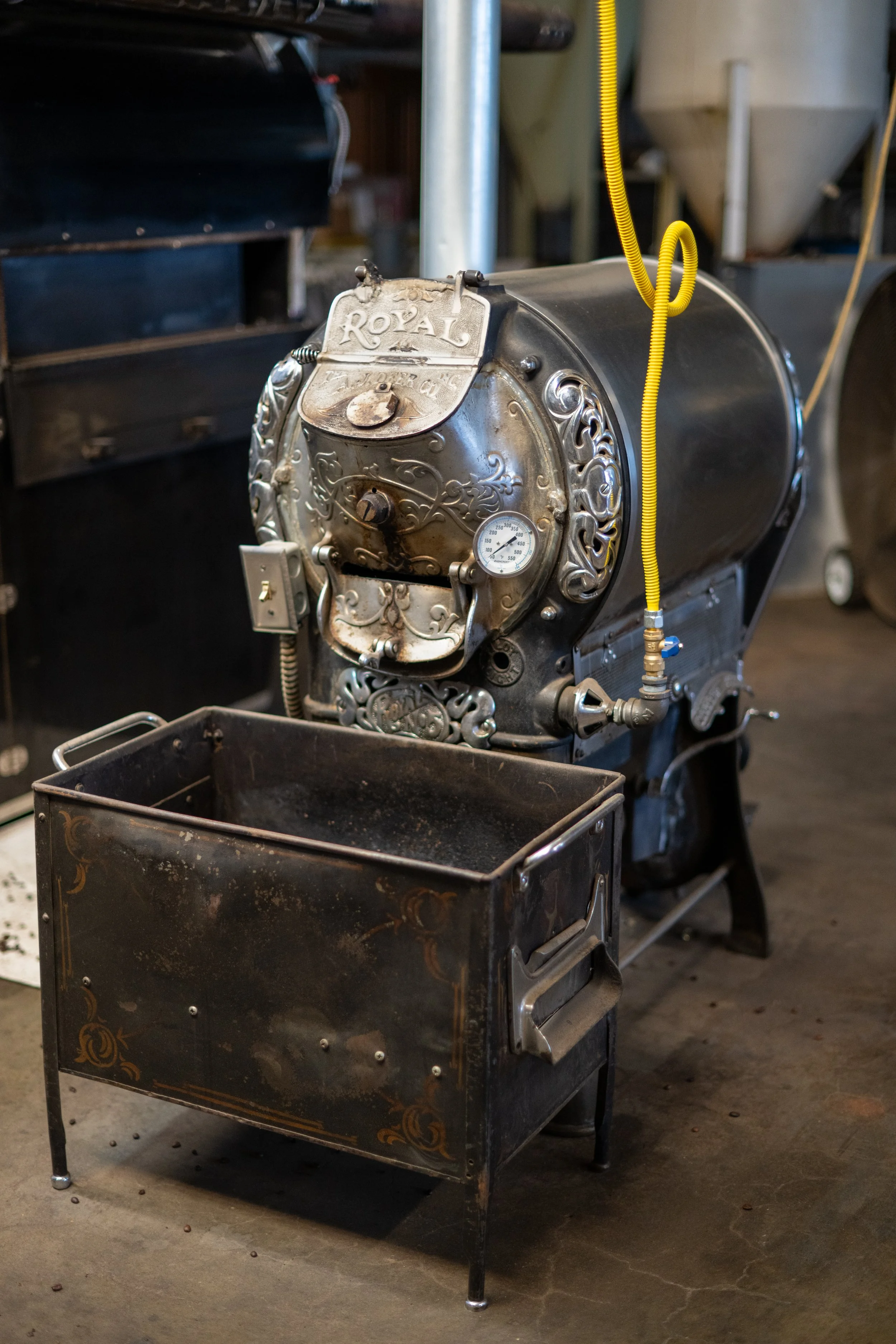
Their varied machinery alone lends to the comparison, including roasters from decades even before Oklahoma statehood. One roaster resembling a steam train has a capacity to roast up to 500 pounds of beans at once. Not to mention, the entire roastery smells like freshly roasted coffee paired with whichever decadent flavor in which the current batch of beans is being tossed. Many of their flavors carry notes of old-fashioned Americana confections found in the types of small-town specialty stores they serve—banana nut split, blueberry cinnamon caramel, Vermont maple crunch.
The origins of this made-to-order coffee bean service trace back three generations to World War II veteran Earl Neighbors, whose coffee journey began when he returned from Japan as a Marine and began running the commissary at Camp Pendleton in San Diego. With this experience, he landed a job back home in Oklahoma City working for Cain’s Coffee, another legendary local coffee-roasting plant that has since been bought by Nestle, Sara Lee, and Farmers Coffee Co.
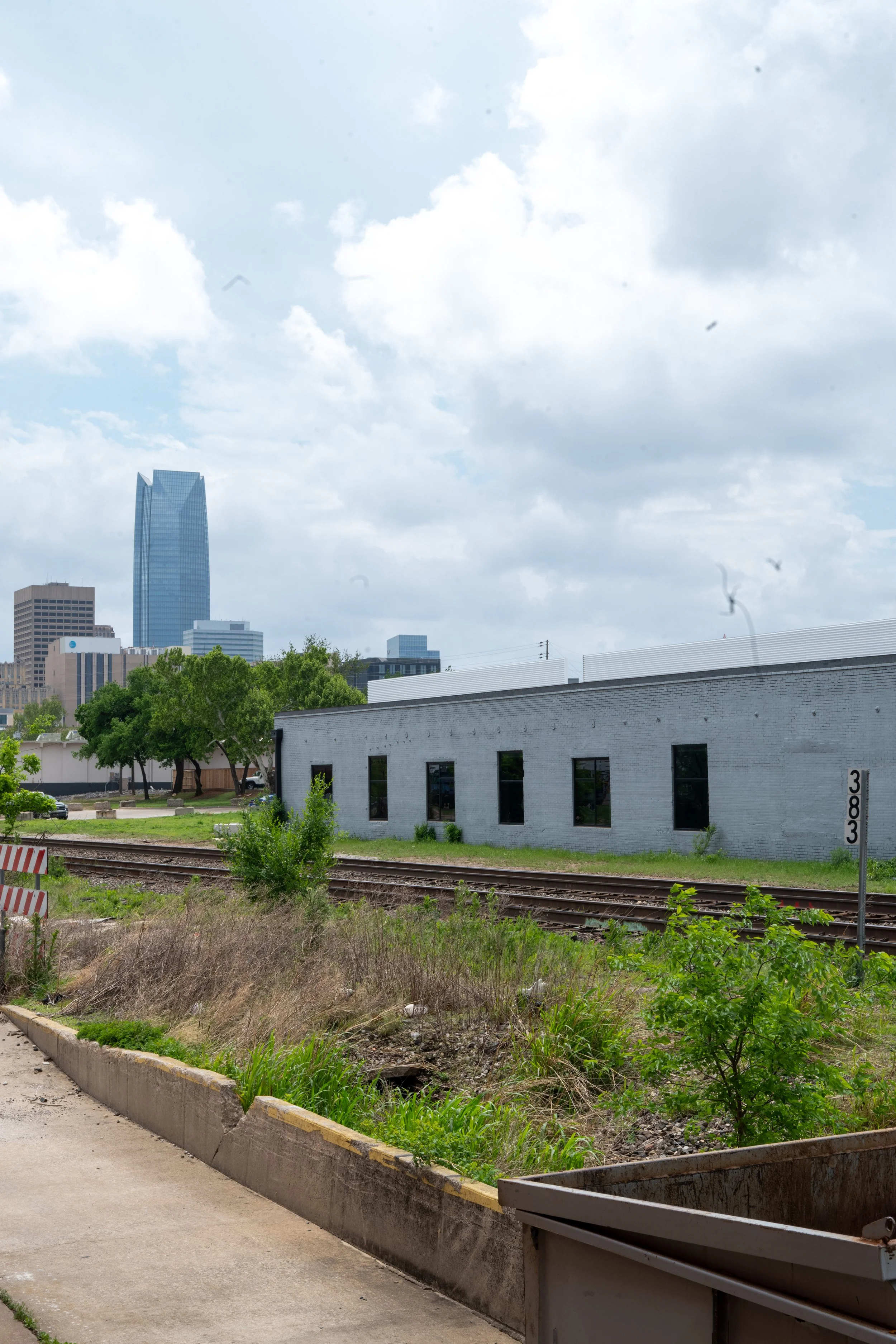
Oklahoma’s coffee industry brimmed with possibility in the 1970s. Just across the train tracks from Neighbors Coffee Roasters at 1 NW 12th Street, Earl worked as production manager at the Cain’s Coffee Building, and his sons, Steve and Fred Neighbors, joined him. After completing a coffee industry report in a college business course, Steve saw the opportunity to claim their own stake. The brothers began setting up coffee machines in offices and restocking coffee beans distributed from Cain’s, calling their business Executive Coffee Service. Then, like good businessmen with an entrepreneurial spirit, they decided to vertically integrate and roast their own beans.
At the peak of its coffee delivery days, Executive Coffee Service had over 100 employees across Oklahoma and Dallas and a fleet of vehicles, acting as the largest independent private coffee service in the U.S. This carried on until the 2010s, when Steve had a stroke. The company sold Executive Coffee Service but kept the gourmet division going, carrying on today as Neighbors Coffee Roasters.
Tourist-driven, roadside stops are among their biggest wholesale clientele—gourmet grocery stores, boutiques, farmer’s markets, gift shops, and even hardware stores. Locally, Shartel Café and Kamp’s are regulars, but Neighbors primarily sells to clients in Texas, Arkansas, Kansas, and Colorado, with the occasional recurring client as far away as Nantucket, Massachusetts. No matter how far their coffee beans are traveling, they have one goal in mind: to deliver the freshest coffee possible to customers.
Neighbors also provides white labeling, a service growing in popularity that allows businesses to “start their own coffee brand” by placing their branding on a package of Neighbors roasted beans. The process is simple: Choose a bag size, a coffee blend, and a bag color, and place an order by email.
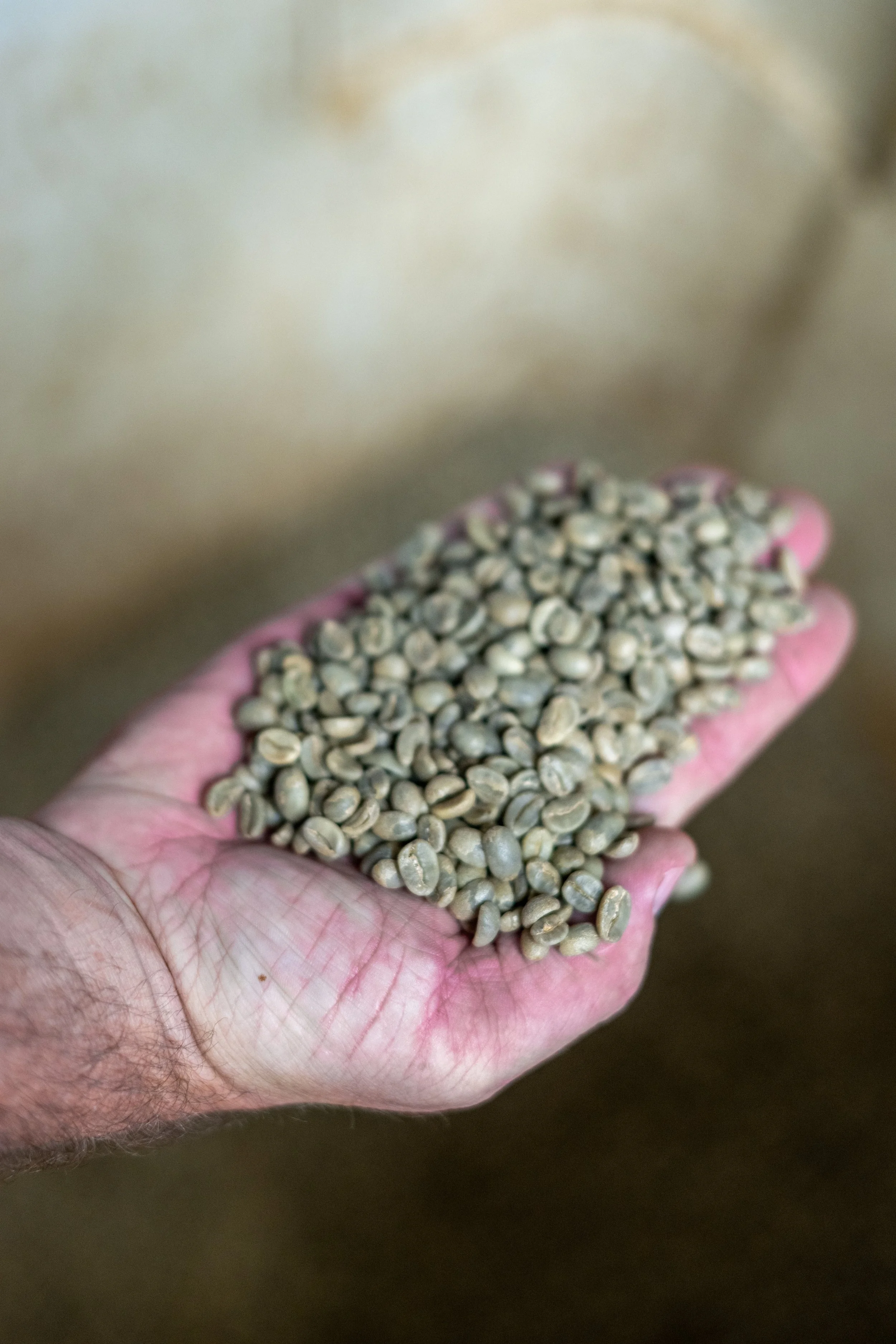
The roasting process begins with raw green coffee beans arriving at their shipping dock by the semi-truckload from top producing countries in the world: Brazil, Ethiopia, Colombia, and Nicaragua, to name a few. The Neighbors crew manually unloads the burlap sacks of beans onto pallets, sorted by country of origin. Between tariffs and climate, crop quality and therefore availability can be unpredictable, priced too high or lacking in quality due to frost or unfavorable rainy seasons, but they’ve learned to adapt and adjust their blends.
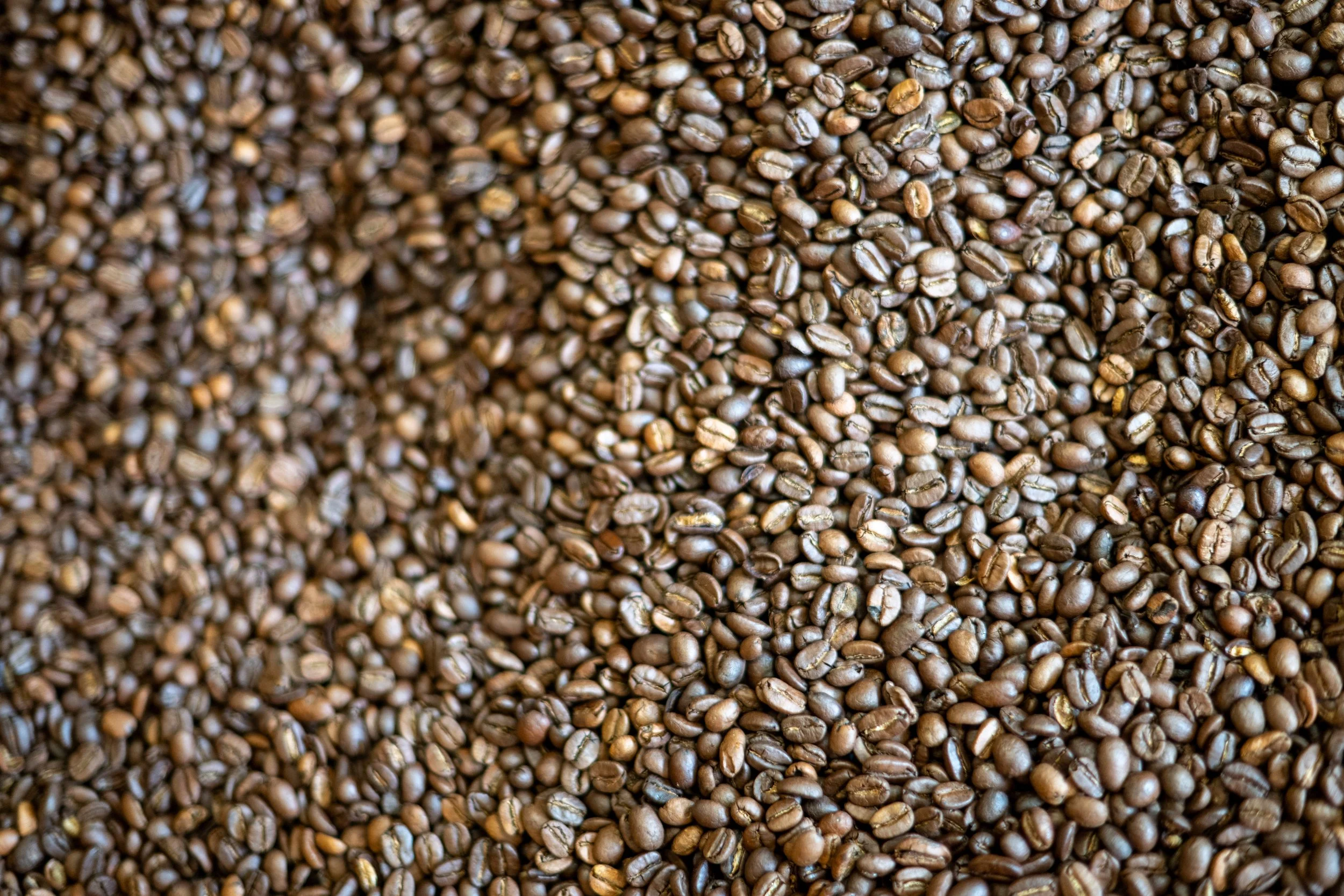
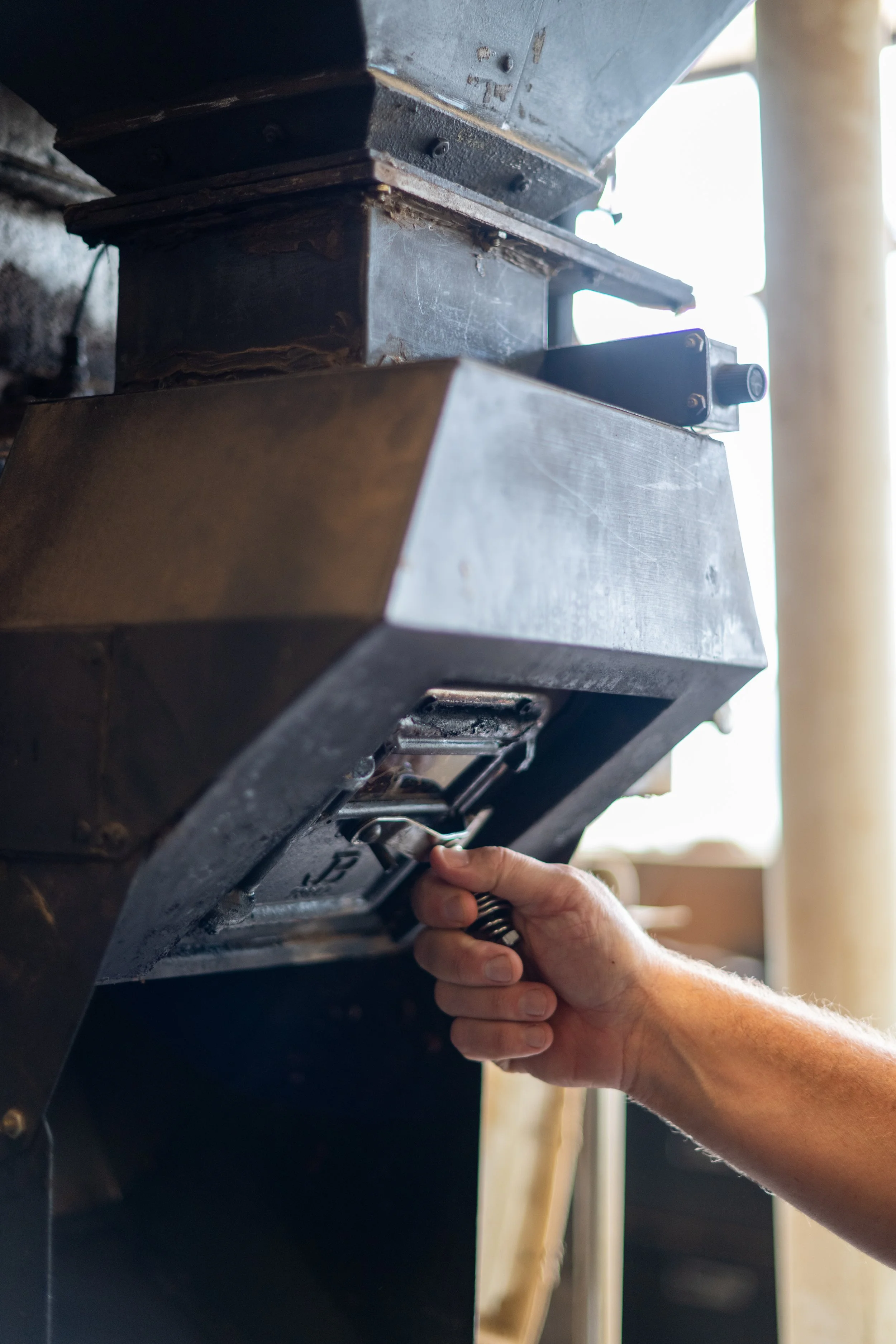
The beans go through the shaker before roasting, which sifts and catches any debris larger than a coffee bean. If the batch is large, the beans are transported by lift into their primary and largest roaster, which holds up to 500 pounds of pre-roasted beans. A blue flame in the chamber, a puff of steam billowing, a rickety drive belt, and a loud rumble—the massive roaster is comparable to a steam locomotive boiler. Right after a batch finishes, Sam Neighbors sticks his bare hand into the oven-like door, and without a flinch, lets the hot, freshly roasted beans sift through his fingers like sand. How it doesn’t scorch him could be something of a mystery or the result of years of practice. Roaster of 30 years and grandson of Earl Neighbors, Sam explains he prefers this manual machine to an automated one because if something goes wrong, he can simply pull a lever and shut it down.
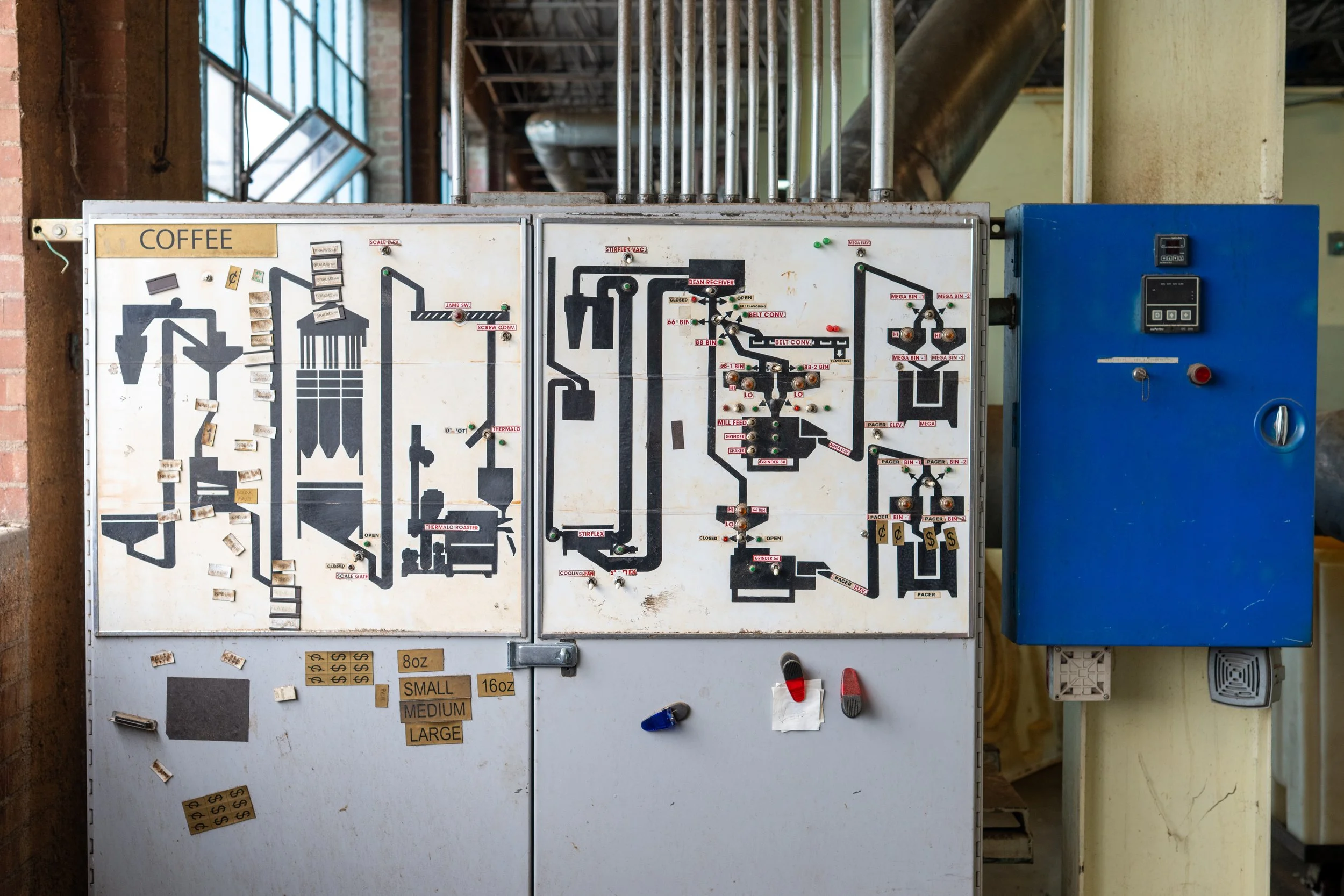
Once roasted, the beans are transferred into a cooling machine to quickly stop the roasting process. A blue control box with switches, knobs, and lights transports beans from one machine to another through an intricate network of tubes traveling through the ceiling and back out, like a bank drive-through’s pneumatic tube. From here, a tube transports the beans and drops them off into a rotary drum mixer for the flavoring stage, where the beans are gently tossed in syrup blends until they’re perfectly coated and glossy.
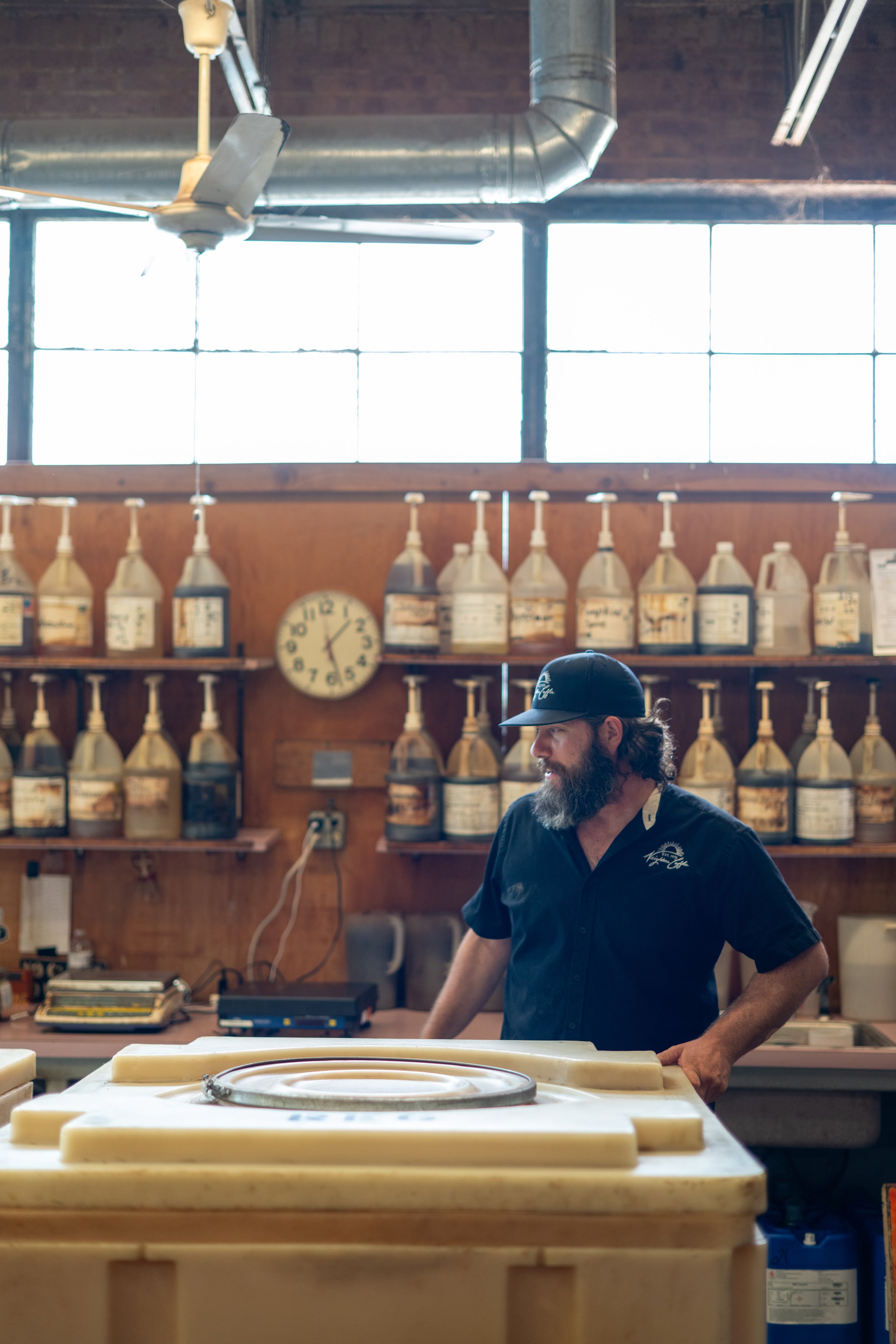
If the roasters and accompanying machinery most resemble Willy Wonka’s inventing room physically, then the flavoring section is its spiritual equivalent, smelling of cherries one minute and chocolate orange the next. Here lives the coffee flavor book, a well-loved binder from 1999 full of recipes that span decades, as well as recent additions like Chili-Vanilli Peppermint and Chocolate Candy Cane Crush. A popular flavor, the 89’er Blend for Oklahomans or Celebration Café for out-of-staters, includes chocolate fudge, amaretto, hazelnut, and Irish creme. Taylor Lucas-Neighbors, office manager and daughter of Fred Neighbors, says, “It reminds me of a chocolate-covered almond biscotti.” And like Willy Wonka’s everlasting gobstopper, Neighbors has their own secret recipe whose ingredients are only to be known by its employees: the Neighbors Private Blend.
Finally, the beans are transported once more through the tube elevator to be portioned into bags, sealed through a conveyor belt system and returned to the shipping dock, in full circle. An order placed today can be shipped tomorrow.
“Most people who do the tour are surprised the coffee comes to us green,” Taylor says.
For many coffee drinkers, the transformative coffee roasting process is a mystery, perhaps even underappreciated and overlooked. “For us and all roasters, people don’t realize we turn a raw crop into a consumable product that someone can buy off the shelf, hold in their hands, and enjoy,” Taylor says. So shines a good deed in this weary world.