Takaramono
Words by Angelina Feronti
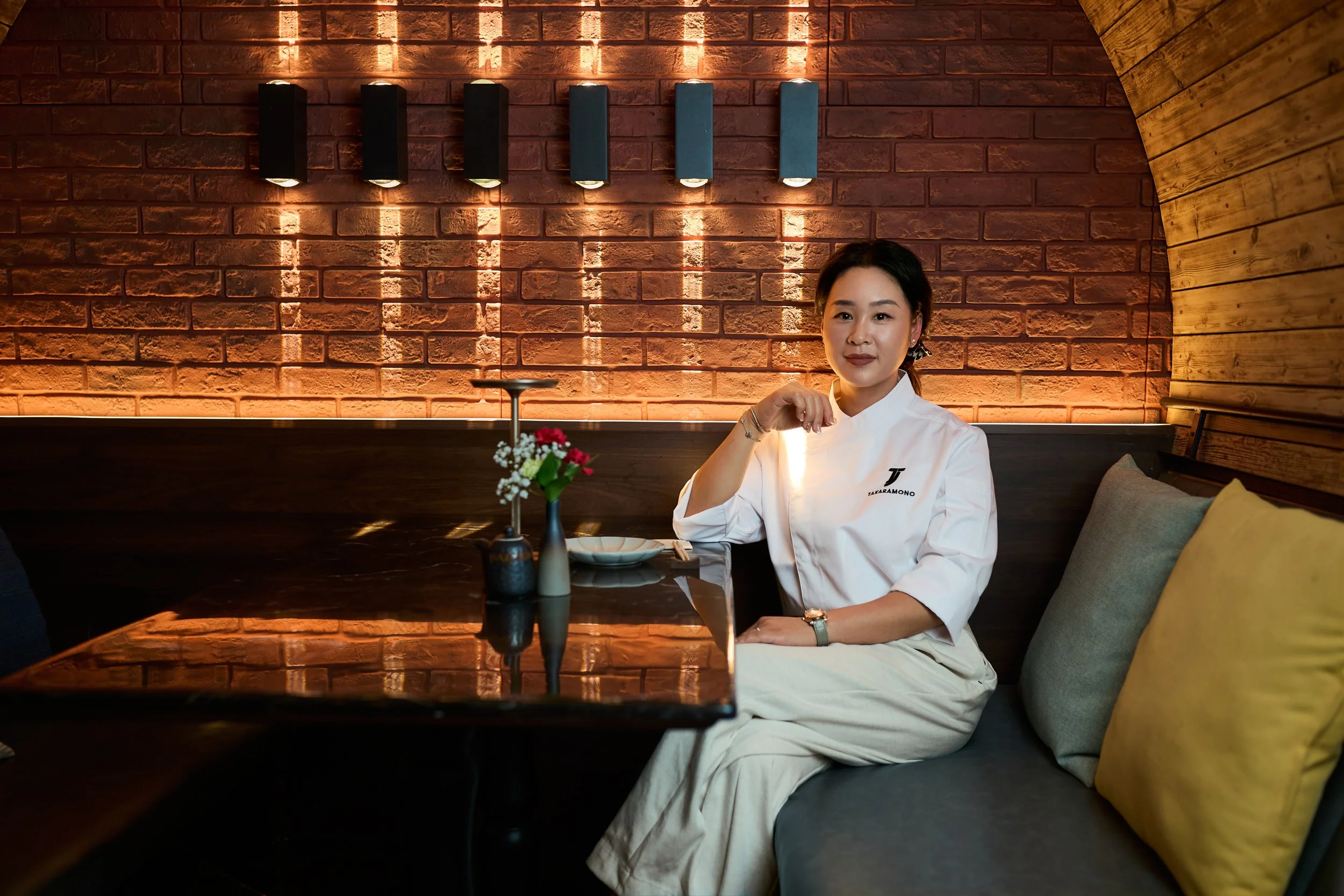
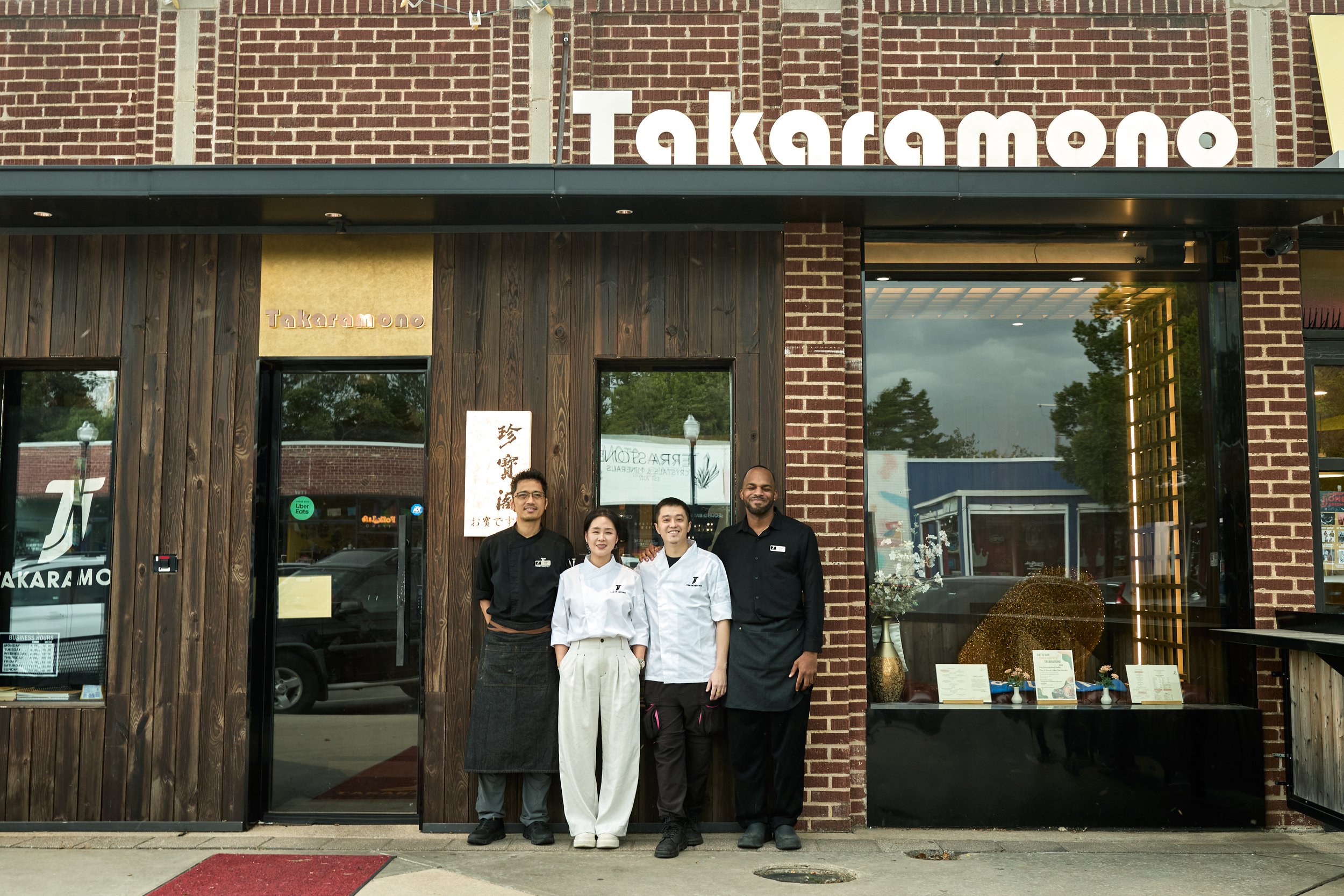
Takaramono, “treasure” in Japanese, embodies its name in place, food, and philosophy. In an understated brick and wood building sitting snugly beside Roxy’s in the Plaza District, the modern izakaya restaurant opens into a sleek and elegant interior, where gold hides in plain sight: dusted onto mochi desserts, curving like ribbon along the dining room ceiling as a golden-hued centerpiece, and most strikingly, a gold-plated jewelry box used to serve sushi.
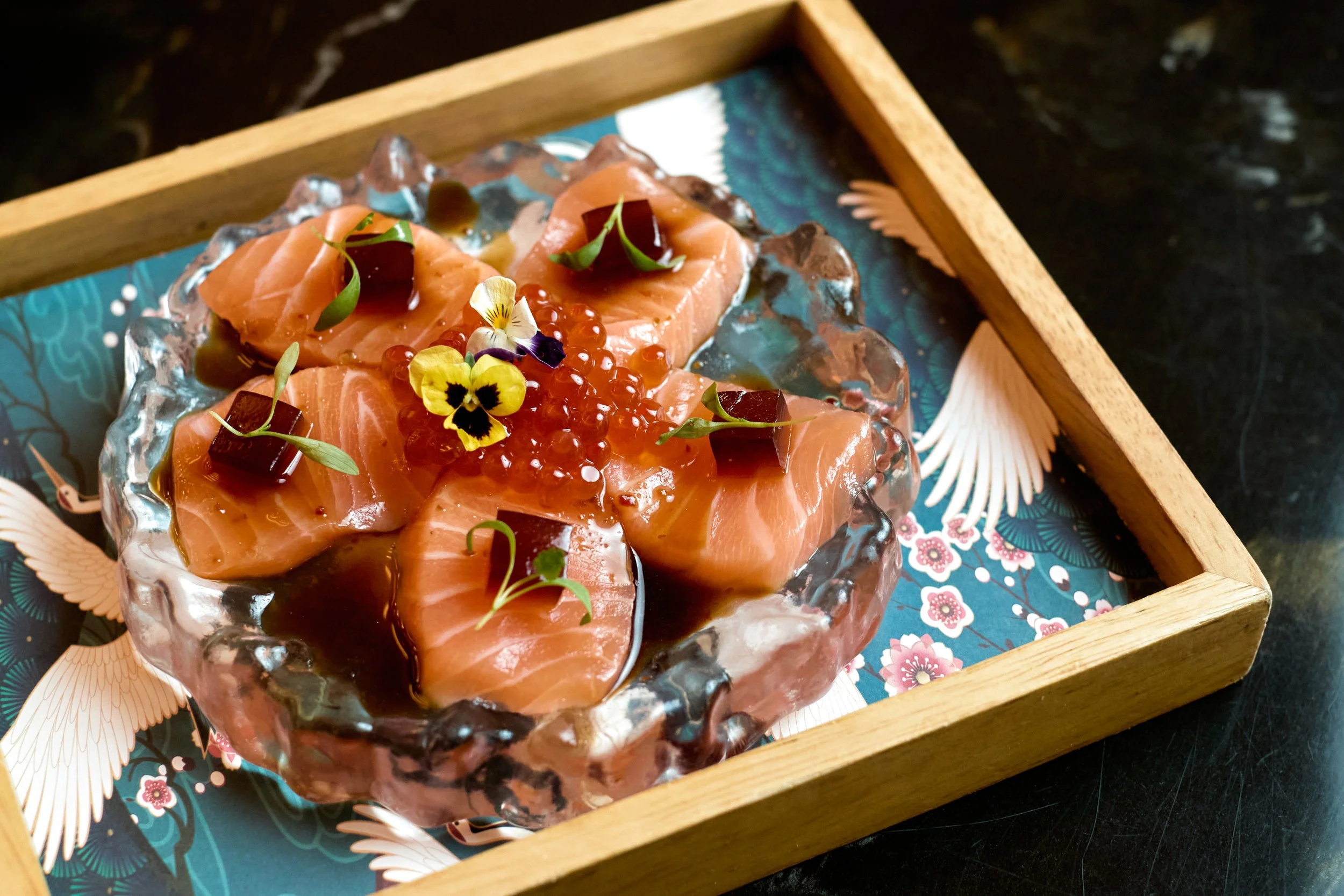
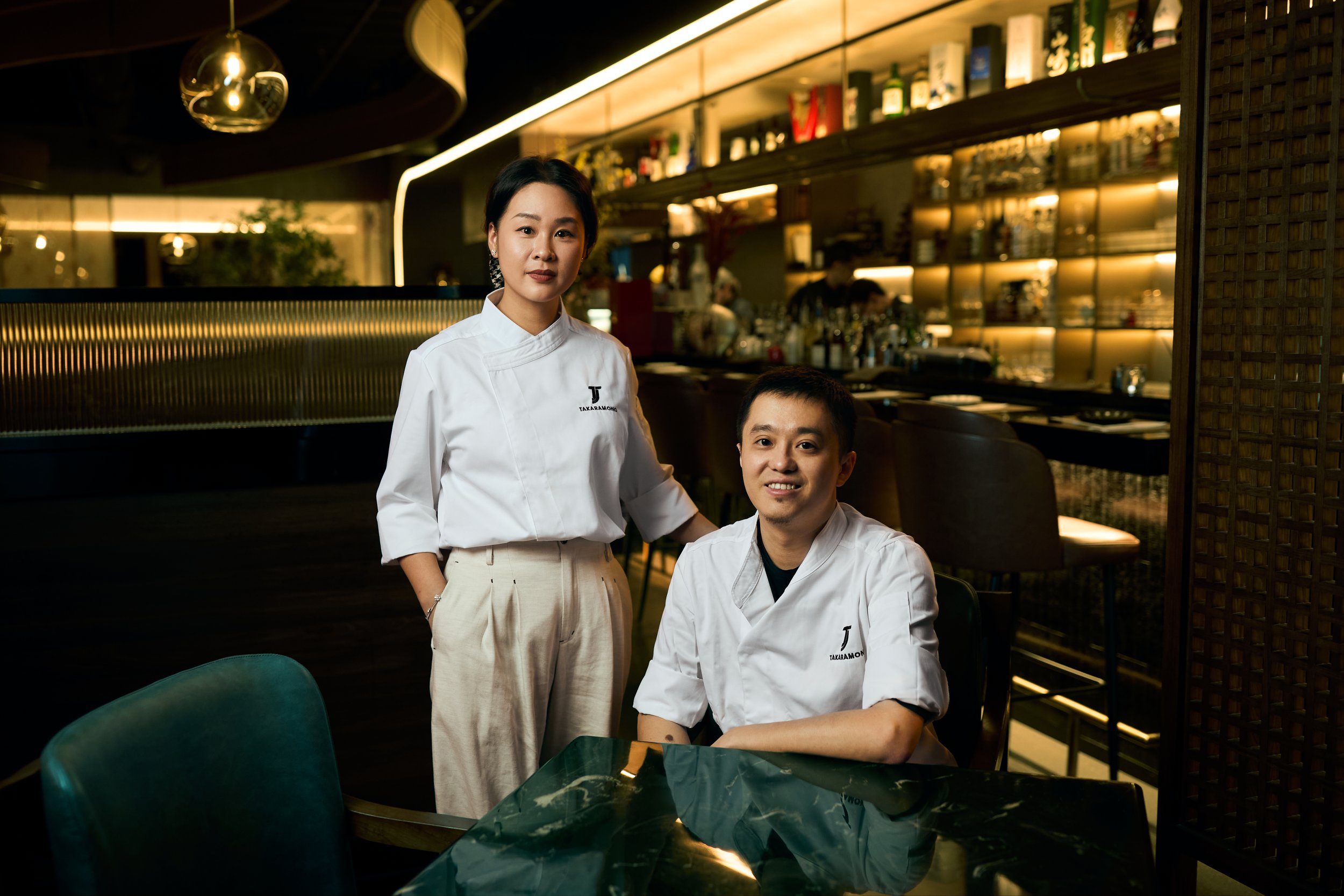
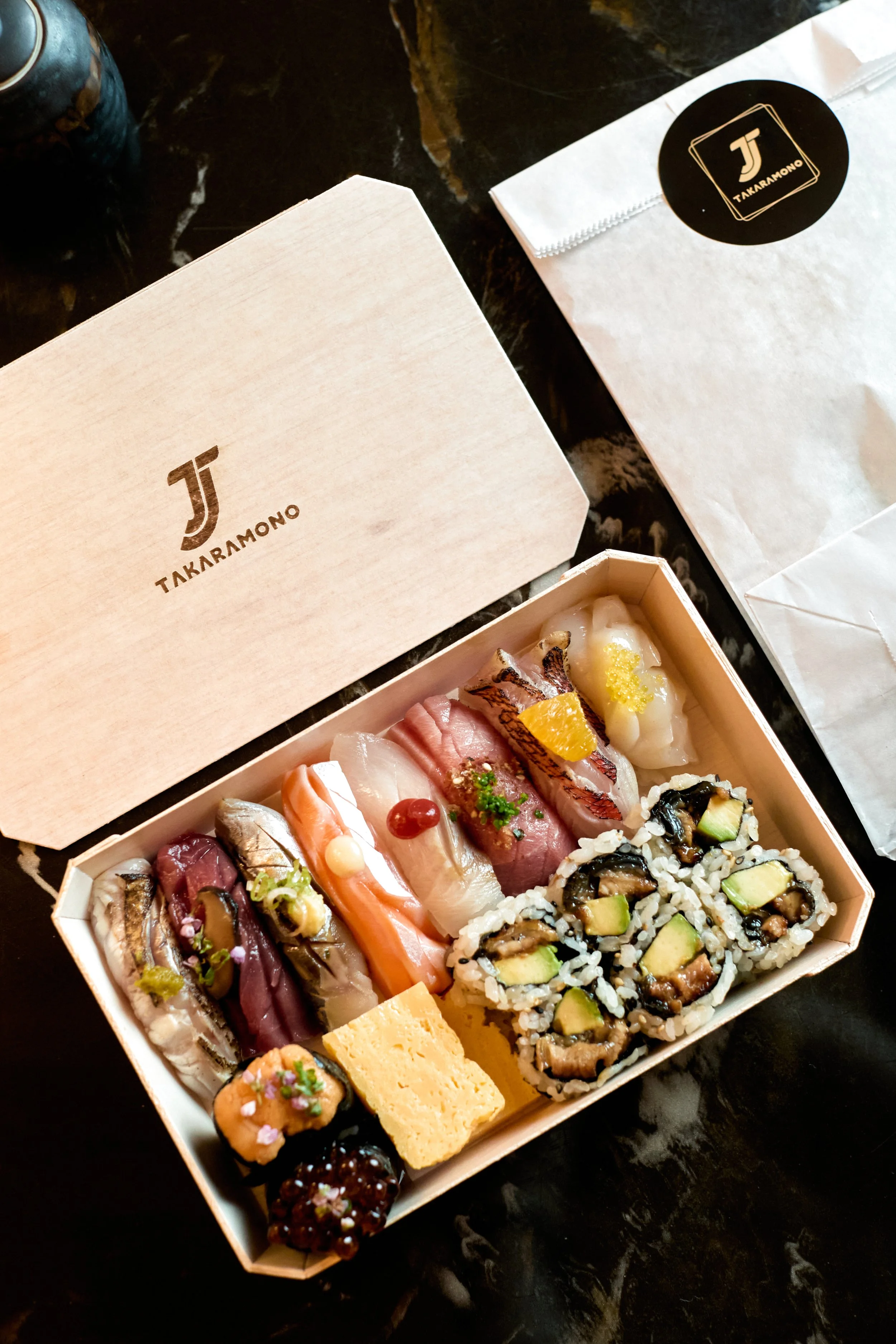
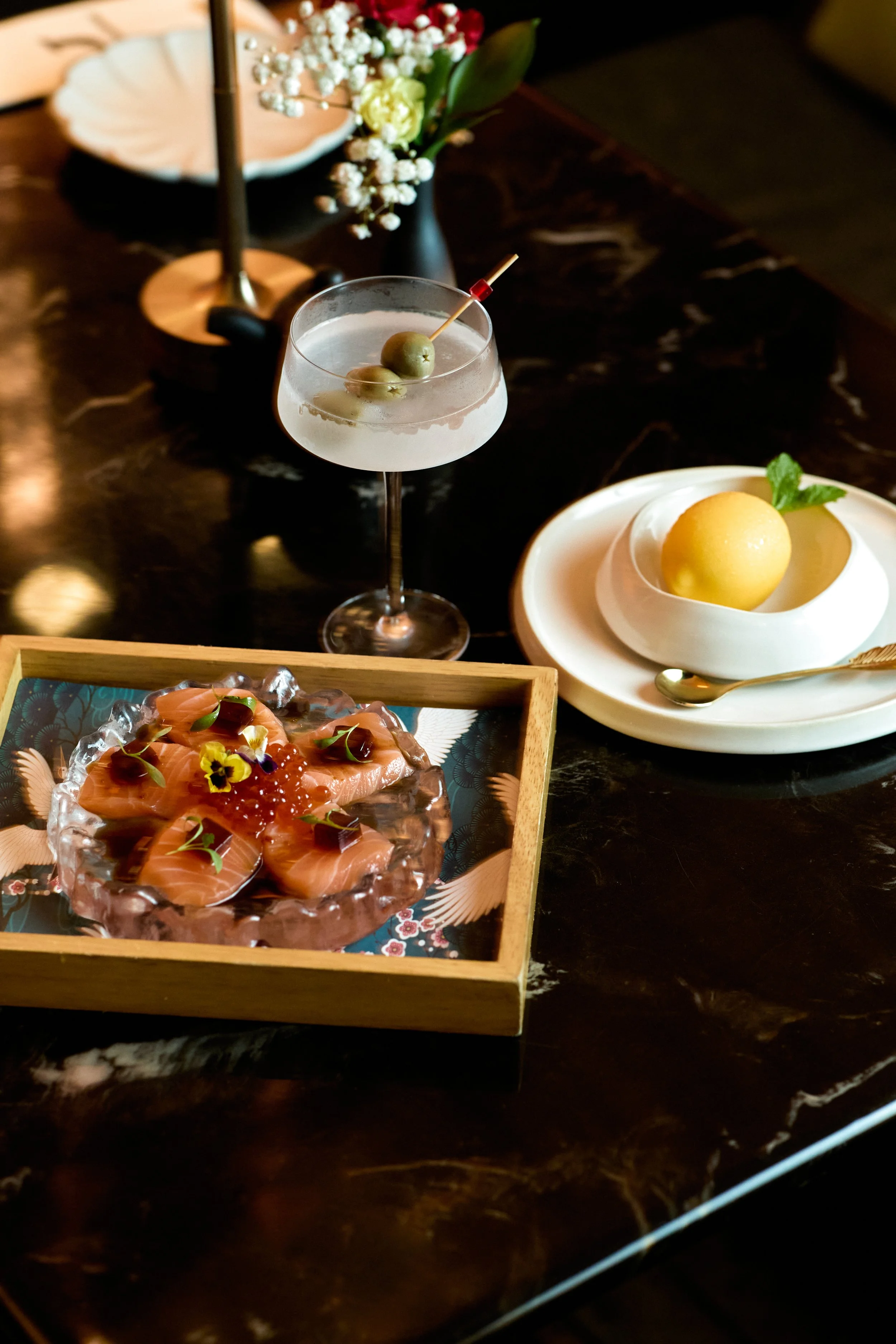
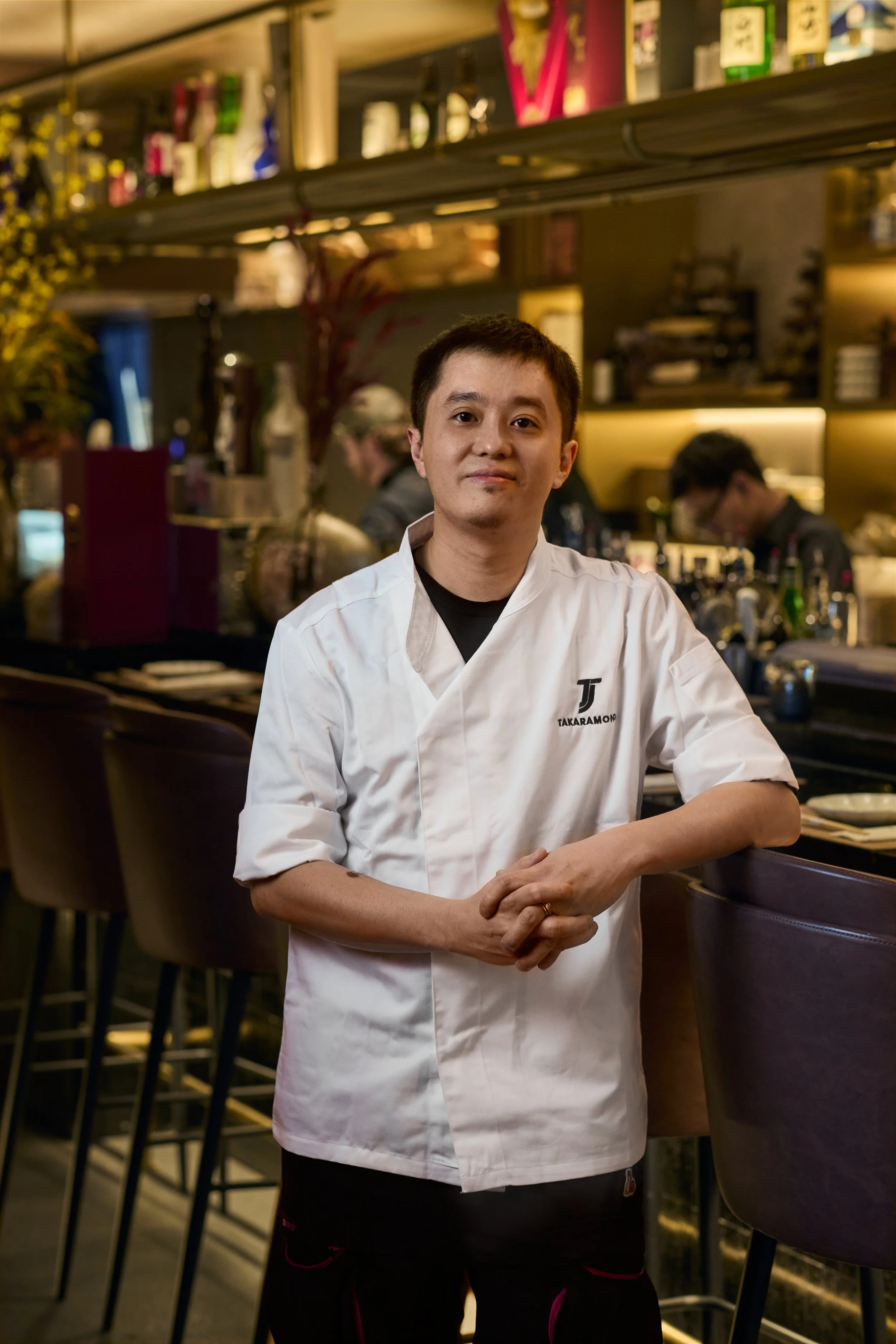
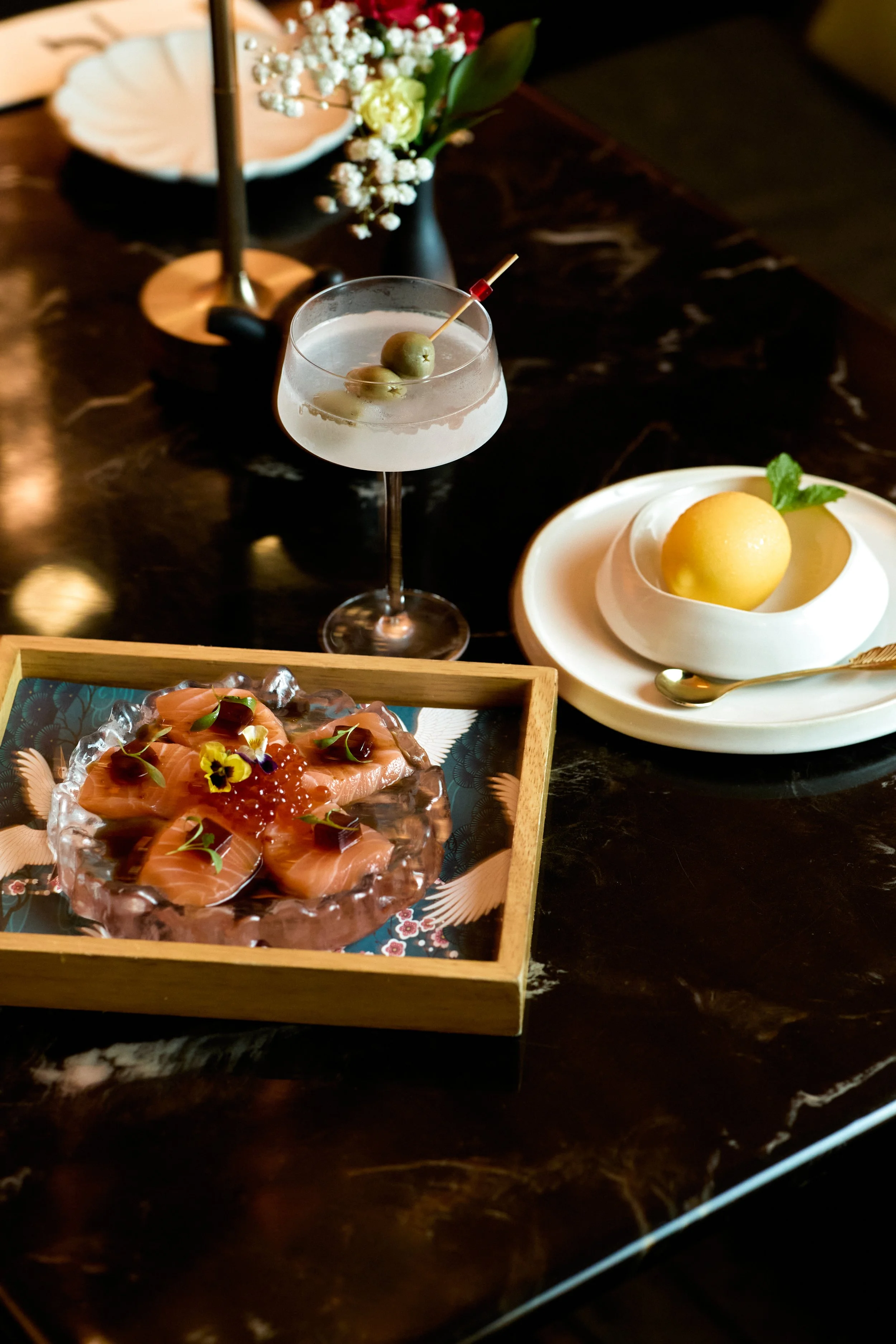
These visual theatrics are more than show. Most of the sushi dishes are presented as little pieces of treasure—pink, coral, and white jewels on plates just as beautiful. (It’s worth noting here that, unlike most sushi restaurants in Oklahoma, Takaramono does not offer a laundry list of rolled sushi, although they have a select few options.) So whether it’s a single piece of aburi toro (seared fatty tuna) pressed onto a shari (the ball of vinegar rice), or the Takaramono mystery box of sushi omakase, each dish feels like receiving a precious gem meant to melt in your mouth. This is all in the name of treasure, and according to chef and restaurateur Ling Chi Wong, “Chef Chi,” the process of looking for treasure—and finding something that feels like it belongs to you—is all in the name of the experience he hopes to provide his guests.
Born and raised in Hong Kong, Chef Chi started his culinary expedition when his interest in school waned and his parents set him up with a sushi restaurant where they knew the chef. Then he found his way to Yardbird, a Michelin-starred modern izakaya restaurant known for yakitori (grilled chicken skewers) helmed by Chef Matt Abergel, who effectively became the first of his two career-altering mentors.
While working at Yardbird, Chef Chi attended the luxury-lifestyle Robb Report magazine culinary competition in Los Angeles. This would introduce him to his second mentor, Chef Masayoshi “Masa” Takayama, the well-known chef and restaurateur behind the eponymous two-Michelin-starred Masa. That omakase-only restaurant and neighbor to Per Se in Manhattan’s Columbus Circle became known for being the most expensive restaurant in the United States—where an omakase dinner can ring up $950 per person before drinks, tax, or tip. After a dinner together, Chef Chi’s return to Hong Kong, and an invitation from Masa himself, he moved to New York City to learn how to cook and live from one of the biggest names in high-end sushi.
“He taught me how to live a life, how to enjoy the season of cooking,” Chef Chi says.
Chef Masa and Chef Chi traveled the world together, cooking for high-profile guests and celebrities, and Chef Chi lived in New York for 13 years. During this time, he worked at Tetsu, one of Chef Masa’s more casual sushi concepts, and met his future Takaramono partners.
While Takaramano doesn’t serve $1,000 meals, Chef Chi prepares newcomers; it’s not on the lower end. With higher prices comes celebrity proximity. At Masa’s Los Angeles restaurant, known for being the city’s most expensive sushi spot during the 1990s and 2000s, Masa reportedly gave special service to Marlon Brando. Chef Chi has found his OKC version: the Thunder. Sam Presti is a regular for whom Takaramono’s Pastry Chef Winnie Weng has baked a special championship cake and even a birthday cake.
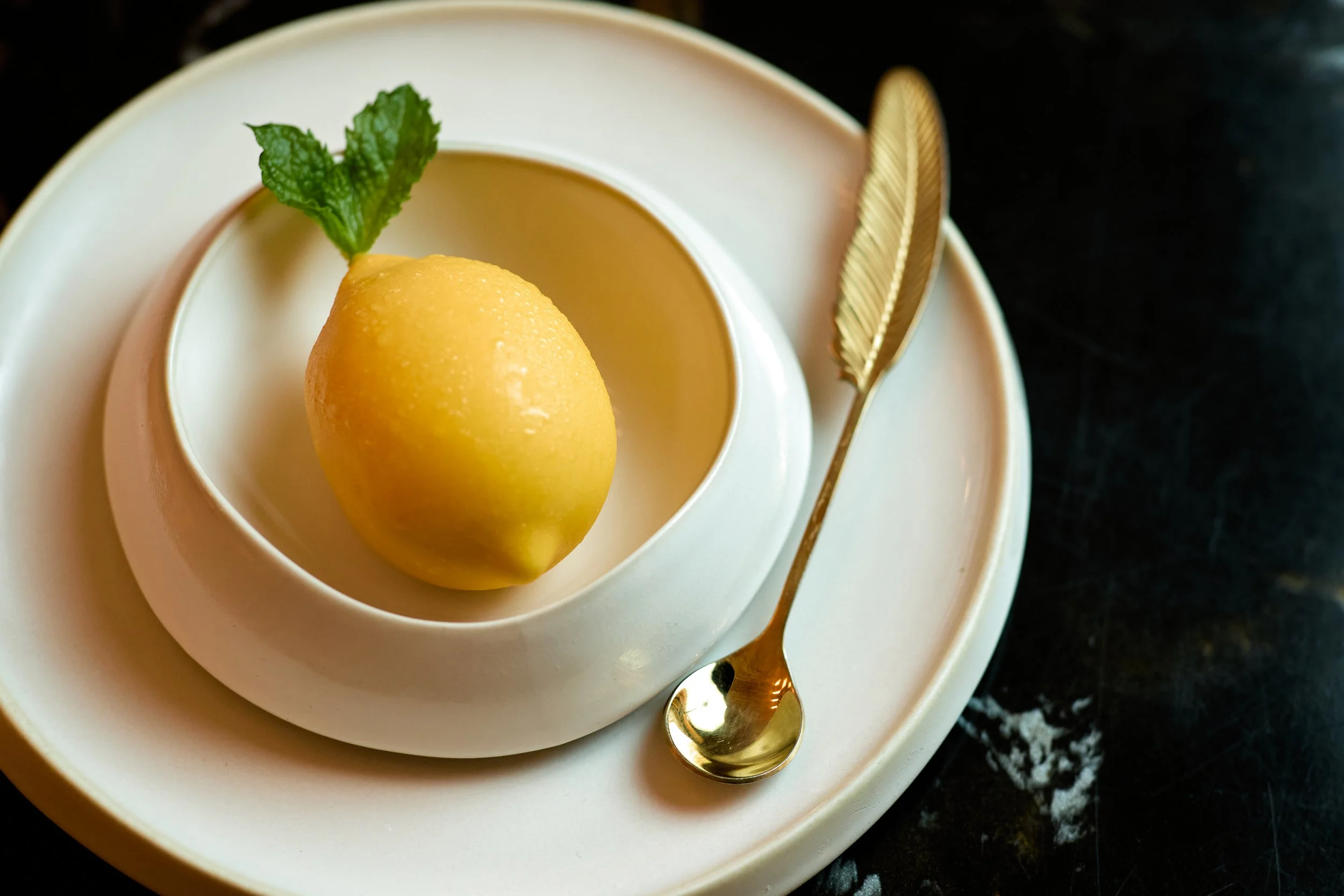
Winnie Weng’s desserts are one of the standouts of the menu, especially “the lemon,” made of a yuzu compote, lemon mousse, chocolate shell, pineapple, and mint in a photorealistic shape of a lemon. Aside from dessert, sushi, and sashimi, the menu also consists of a raw bar and Western entrees like roasted prime beef steak and miso cod.
One of their signature dishes, K.F.C, or Korean fried cauliflower, is the first dish Chef Chi resonated with making during his Yardbird days. The enjoyment he felt is key to how he creates his rotating seasonal menus. “I make my own menu based on what I actually want to eat. Based on my feeling.” Because of this approach, some items, he acknowledges, are dishes you wouldn’t normally find in a sushi restaurant, such as the sizzling snow crab claws cooked in olive oil and white wine. But it works. “I bring that to my menu because, first of all, I like to eat that dish. That’s what I learned from Masa,” he says.
Another sage practice he learned from Masa is supplying ingredients from the source. During the run of Masa’s Beverly Hills restaurant Ginza Sushiko, he flew in his fish from the Tsukiji fish market in Tokyo. Now, Chef Chi imports caviar and Japanese fruit from NYC vendors, and oysters and mussels from New Zealand during the summer, obtaining them from the Southern Hemisphere to get higher quality wintertime shellfish.
Despite the hot summers in Oklahoma, Chef Chi has acclimated. In the beginning, he thought Oklahoma needed a restaurant like Takaramono. “I just like being in Oklahoma,” he says now. “Being close with my Thunder players, serving people who really appreciate the time here. It motivates me.”
Chef Chi’s motivation has led to rapid expansion. In less than a year and a half, he has five restaurant projects in various stages. In addition to Takaramono, these include Ling Long, an Asian fusion restaurant in the Asian District that opened in December 2025; Oishii Express in The Village, a drive-thru sushi restaurant, which opened in May 2026; a Takaramono coming soon to Automobile Alley’s Medley Marketplace, a food court scheduled to open in fall 2026; and a Takaramono Omakase coming soon to Dallas. And like Masa called him years ago, he’s calling his colleagues from the NYC restaurant world to join him.
Like a voyager who has found an alluring, bountiful trove, Chef Chi summons his fellow mates, the hungry and curious alike. There is treasure waiting to be discovered by those willing to shell out a coin and venture into something different. And with the nudging patience of someone who knows the search is worthwhile, he says, “If you find something that you like or love, you will be back eventually.”